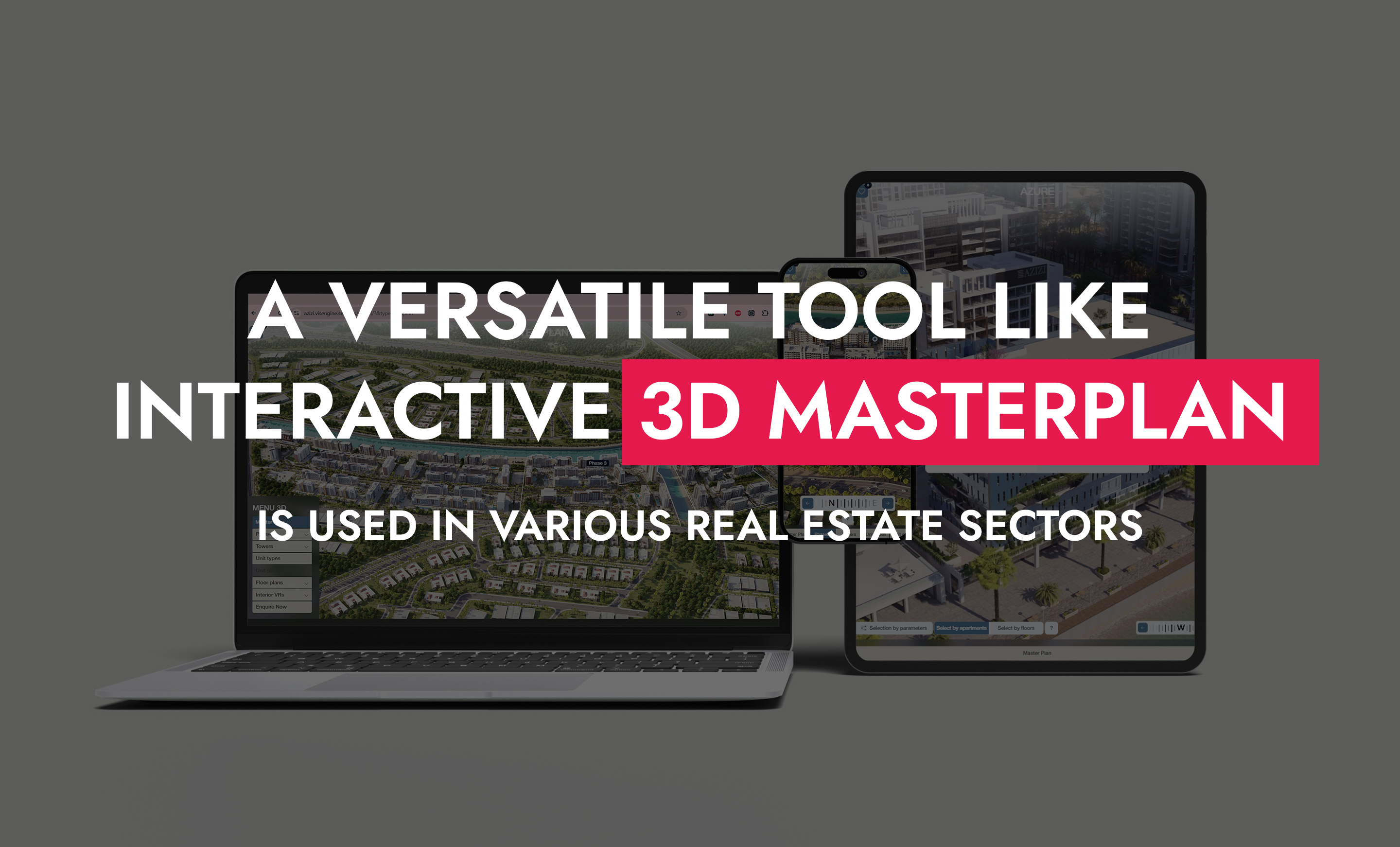
A Versatile Tool Like Interactive Masterplan is Used in Various Real Estate Sectors
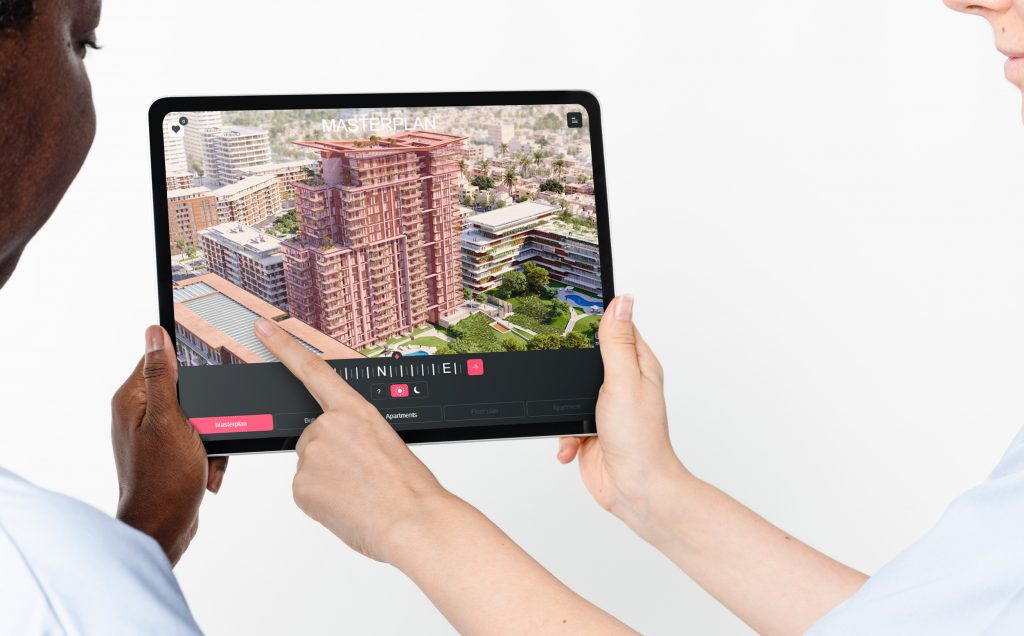
Interactive 3D masterplan solutions have long since gone beyond being merely “impressive presentations.” Today, they are a full-fledged tool for sales, navigation, and communication that works with various types of development projects – from residential complexes to large-scale urban districts. But where exactly do such solutions have the greatest impact? And for which types of real estate do they become not just useful, but critically important?
An interactive 3D masterplan best realizes its potential when a project has a complex structure, a large number of properties, or requires an explanation of the spatial layout. In such cases, static renderings no longer provide the full picture, and it’s important for the client to see not just a single building, but the entire context.
Large-Scale Residential Development
In large residential projects, an interactive platform effectively becomes the primary sales tool. When it comes to complexes with dozens of buildings or multi-phase developments, it’s difficult for clients to get their bearings using only floor plans and images.
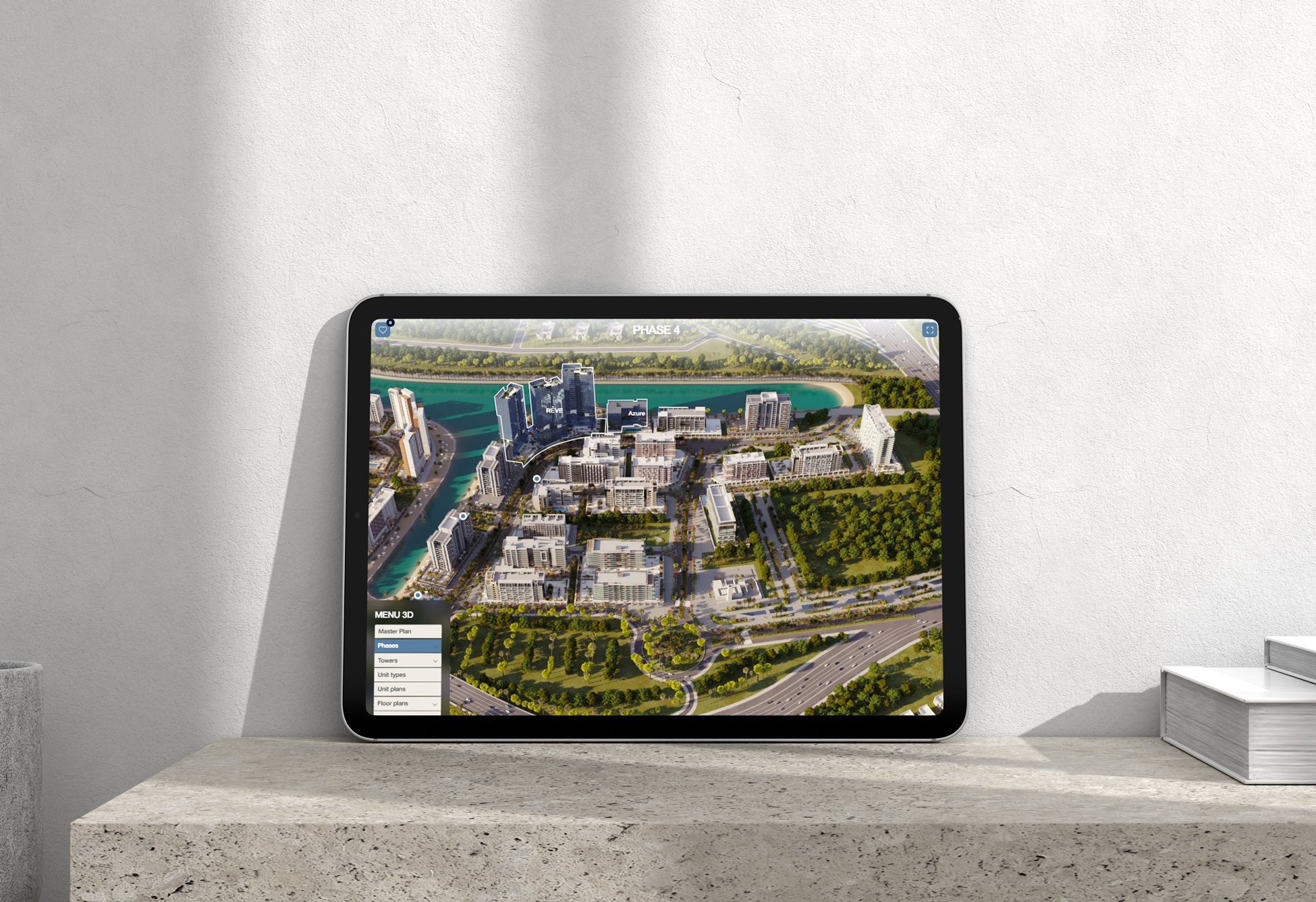
An interactive master plan allows you to see the overall structure of the complex: the layout of the buildings, the distances between them, and access to infrastructure. This is especially important for projects that combine different types of housing – for example, apartments and townhouses.
Users are able not only to choose an apartment but also to understand how it “fits” within the overall project.
Villas and Townhouses
For gated cottage communities and premium villa projects, it’s not just the house itself that matters, but also its location. An interactive master plan helps highlight the differences between lots, the orientation of the homes, privacy, and proximity to water, green spaces, or infrastructure.
In such projects, clients often choose not just a property, but a lifestyle. And it is the interactive format that allows them to experience this.
Mixed-use Projects
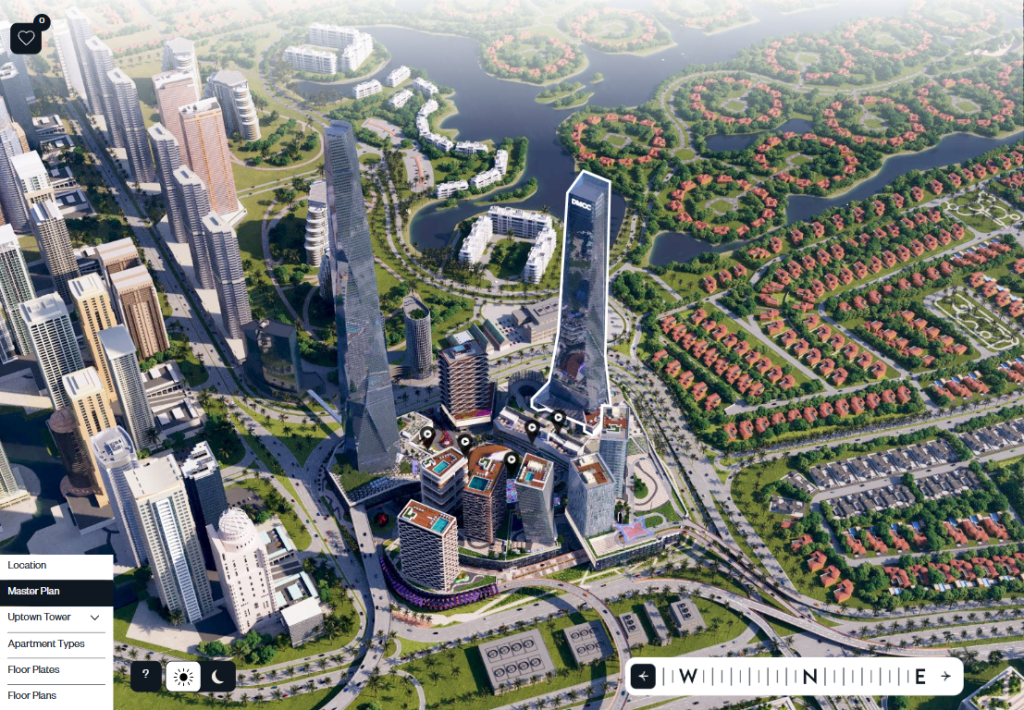
When residential, office, retail, and hotel spaces are combined within a single area, the complexity of the project increases exponentially. An interactive master plan serves as a way to explain the logic behind how all these functions interact. Users can see where commercial zones are located, how pedestrian flows are organized, and where public spaces are situated.
For the developer, this is an opportunity to showcase not only the individual properties but also a cohesive urban vision.
Resort and Hotel Projects
In resort real estate, context is of great importance: views, landscape, proximity to water or mountains, and the location of infrastructure. An interactive master plan allows clients to explore the resort’s grounds and understand where the beaches, restaurants, spa areas, and golf courses are located.
This is especially important for international buyers who are unable to visit the location in person. In such cases, the digital platform effectively replaces the physical experience.
Office and Business Parks
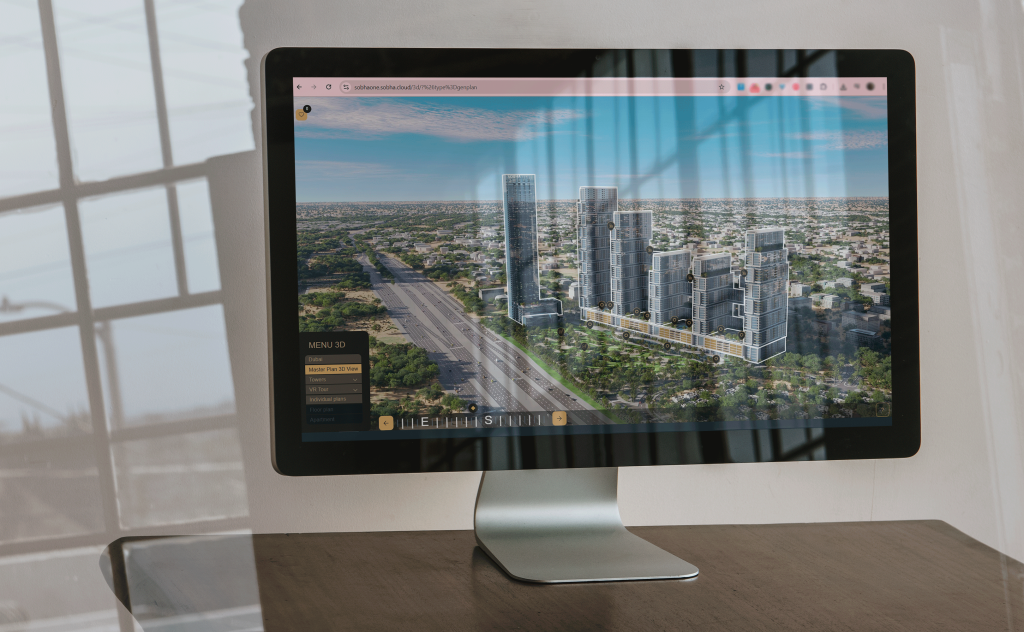
For commercial real estate, functionality is a key factor. Companies evaluate office locations, access to infrastructure, logistics, and the interaction between buildings. An interactive master plan helps visualize these aspects: it shows the campus layout, available space, and scenarios for space utilization.
This makes the decision-making process faster and more informed.
Industrial and Logistics Parks
At first glance, such projects may seem to require less visualization. But this is precisely where interactive solutions can offer a significant advantage. Logistics, access to transportation routes, and land zoning – all of these are difficult to explain using static materials.
An interactive master plan allows you to demonstrate how the infrastructure works: warehouse locations, traffic flows, and loading zones. This is particularly valuable for a B2B audience that makes decisions based on efficiency.
Urban Planning and Large-Scale Urban Projects
At the city or district level, an interactive master plan serves as a strategic communication tool. It allows for the visualization of a territory’s development, integration with existing infrastructure, and implementation phases. For smart city projects, it also serves as a way to showcase technological solutions and lifestyle scenarios.
In such cases, the focus is not merely on selling real estate, but on shaping a vision for the future environment.
An interactive master plan is a versatile tool that adapts to various types of projects, but it is most valuable where there is complexity, scale, and a need for explanation.
It allows you not just to showcase a property, but to reveal the logic of the space, its interconnections, and usage scenarios. That is precisely why interactive platforms are becoming the hub of digital communication – whether it’s a residential complex, a resort, or an entire urban district.

Get in Touch
Drop us a line or give us a ring. We love to hear from you!