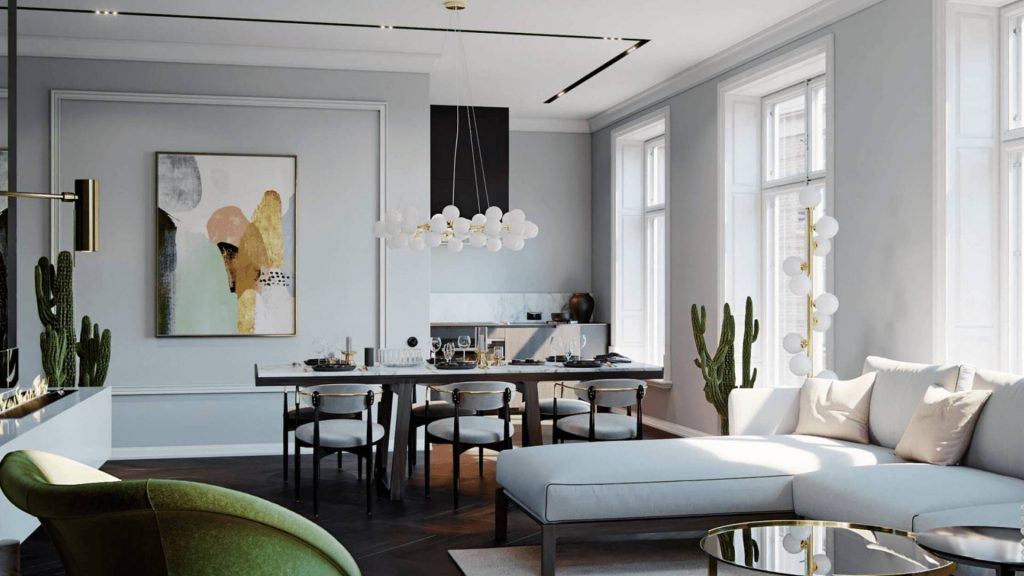
Common Mistakes in 3D Visualization: How to Make an Image Convincing

3D visualization has become a powerful tool for architects, designers, and developers. It allows them to show clients what the future space will look like even before construction or renovation begins. But despite the high level of technology, even experienced visualizers can make mistakes that reduce image quality. Let’s take a look at the most common mistakes in 3D visualization and tips on how to avoid them.

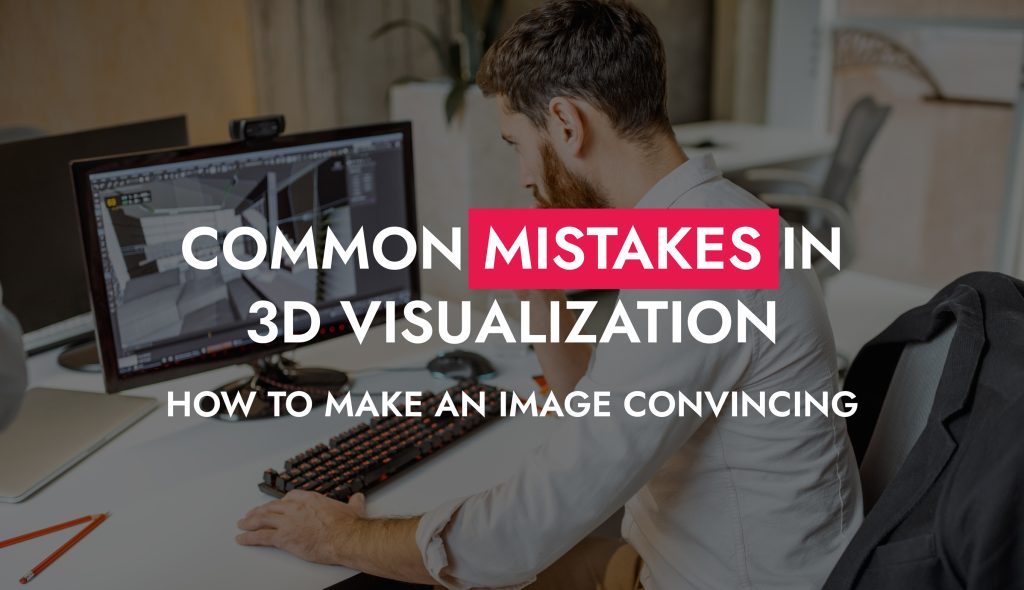
002 26 26 Common Mistakes In 3D Visualization 1024x590

Have you ever looked at a 3D visualization and felt that something was wrong? The image looks correct, but it is not convincing, does not evoke emotions, and sometimes even repels. The reason is simple: small mistakes that spoil the overall impression. Sometimes, overly bright lighting or “plastic” textures are enough to make a client doubt the professionalism of the work. Our experience shows that even professional visualizers occasionally encounter mistakes that reduce the quality of the final product. From poor lighting settings to ignoring post-processing, all these nuances can cost you the client’s trust. In this article, we have compiled the most common mistakes and practical tips to help you improve your visualizations so that every render works towards the result.

1. Unrealistic lighting

Light is the foundation of any image. If it is set up incorrectly, even the most detailed model will look artificial.

Common mistakes: excessive brightness, lack of natural shadows, monotonous lighting without light sources of different temperatures.

How to avoid it: combine daylight and artificial lighting, pay attention to color temperature and the location of light fixtures, create a realistic balance of light and shadow.

2. Poorly chosen materials and textures

Materials determine the realism of the visualization. If the texture has low resolution or repeats too often, the image immediately “gives away” its artificiality.

Common mistakes: blurry or pixelated textures, unrealistic reflections, a “plastic” effect on wood or fabric.

How to avoid it: use PBR (Physically Based Rendering) materials, check the scale of the texture relative to the object.

3. Empty or overloaded interiors

In interior visualization, it is important to find a balance. An empty room looks lifeless, while one that is oversaturated with decor distracts from the main point.

Common mistakes: rooms without furniture or details, an excessive amount of accessories that create chaos.

How to avoid it: Focus on the desired result. If it is a commercial visualization, add enough details to create atmosphere, but leave space to “breathe.”

4. Lack of scale and proportion

Even a beautiful render can look wrong if the objects do not correspond to real proportions.

Common mistakes: furniture that is too large for a small room, doors that are taller than standard, furniture that is out of proportion to each other.

How to avoid it: work with real dimensions, always check the model parameters against drawings and specifications.

5. Perfect but “dead” image

Photorealism does not always mean liveliness. It is important for the client to feel the atmosphere of the space.

Common mistakes: overly sterile interiors, perfect surfaces without any unevenness, lack of signs of life.

How to avoid it: add elements of life — books, textiles, a cup on the table, signs of use. This creates a feeling of real space that you want to be in.

6. Incorrect camera angles

Even a perfectly composed image can be ruined by an unfortunate angle.

Common mistakes include overly wide-angle perspectives that distort proportions or, conversely, flat views with no depth.

How to avoid it: test several camera options, use a focal length close to human vision (about 35–50 mm), think like a photographer.

7. Ignoring post-production

A raw image from a render often needs final touches.

Common mistakes: lack of color correction, weak contrast, ill-considered application of effects.

How to avoid it: use post-processing — white balance, toning, light depth of field effects. This helps to make the image more attractive and complete.

3D visualization is a combination of art and technology. Mistakes often arise not because of a lack of tools, but because of neglecting details. It is important to remember: details create trust, and trust is what ultimately turns a viewer into a customer. By avoiding common mistakes, the visualizer gets not just a picture, but a powerful communication and sales tool.

Get in Touch

Drop us a line or give us a ring. We love to hear from you!


Price Guideline 1024x683
Your Package

×
Dein Paket

×
Il tuo Pacchetto

×
Votre Choix

×
اختيارك

×
Your Request


×
Your Request


×
Your Package

×
Your Package

×
Your Package

×
Your Package

×
Your Package

×
Dein Paket

×
Dein Paket

×
Dein Paket

×
Dein Paket

×
Dein Paket

×
Il tuo Pacchetto

×
Il tuo Pacchetto

×
Il tuo Pacchetto

×
Il tuo Pacchetto

×
Il tuo Pacchetto

×
Il tuo Pacchetto

×
Votre Choix

×
Votre Choix

×
Votre Choix

×
Votre Choix

×
Votre Choix

×
اختيارك

×
اختيارك

×
اختيارك

×
اختيارك

×