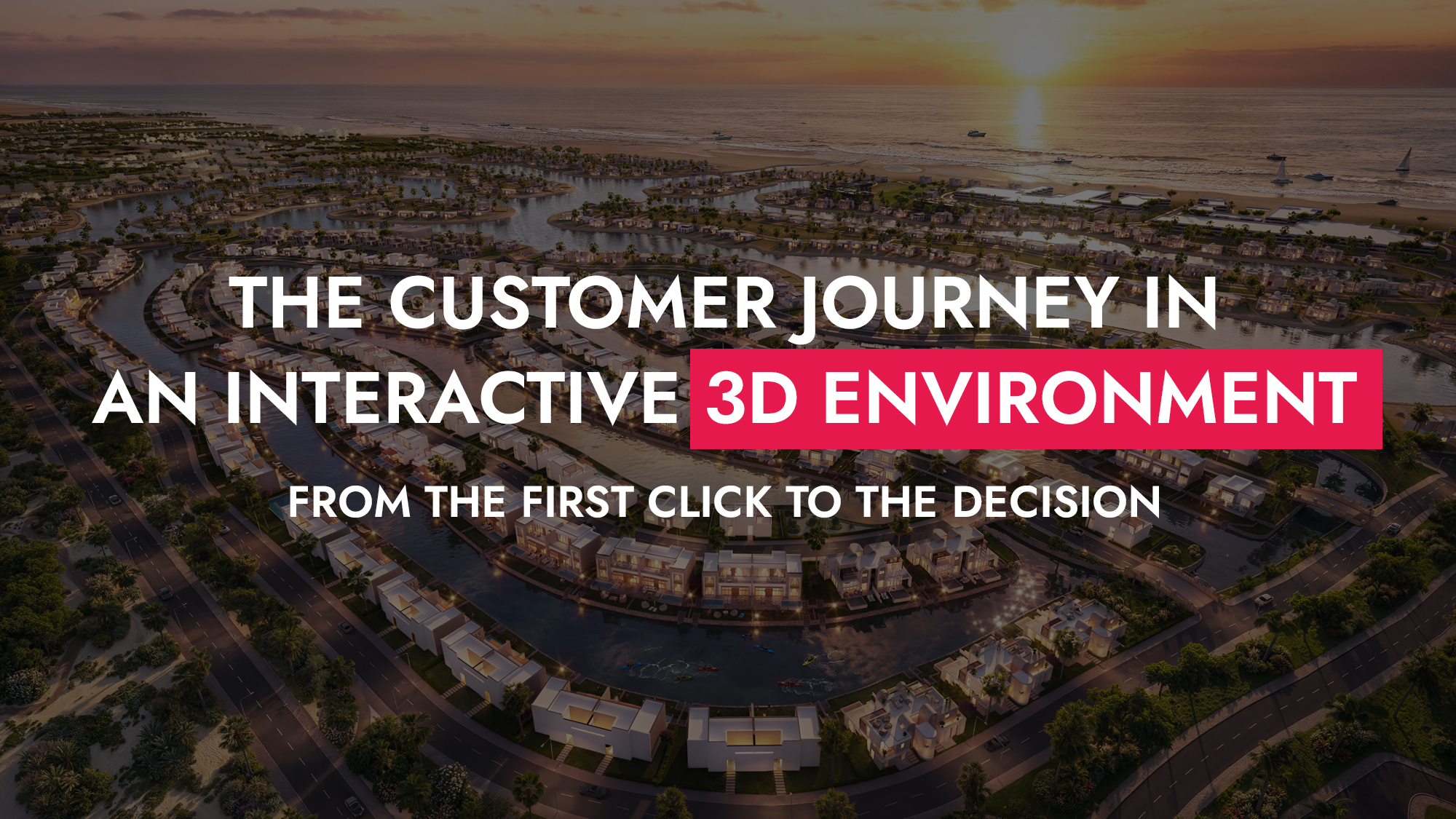
The Customer Journey in an Interactive 3D Environment: From the First Click to the Decision

Interactive 3D masterplans are changing not only the way projects are presented but also customer behavior. Today, decisions to buy or invest are increasingly made not after a sales manager’s presentation, but during independent interaction with the space in a digital environment. In this article, we’ll explore exactly what this process looks like.

007 06 26 The Customer Journey In An Interactive 3D Environment

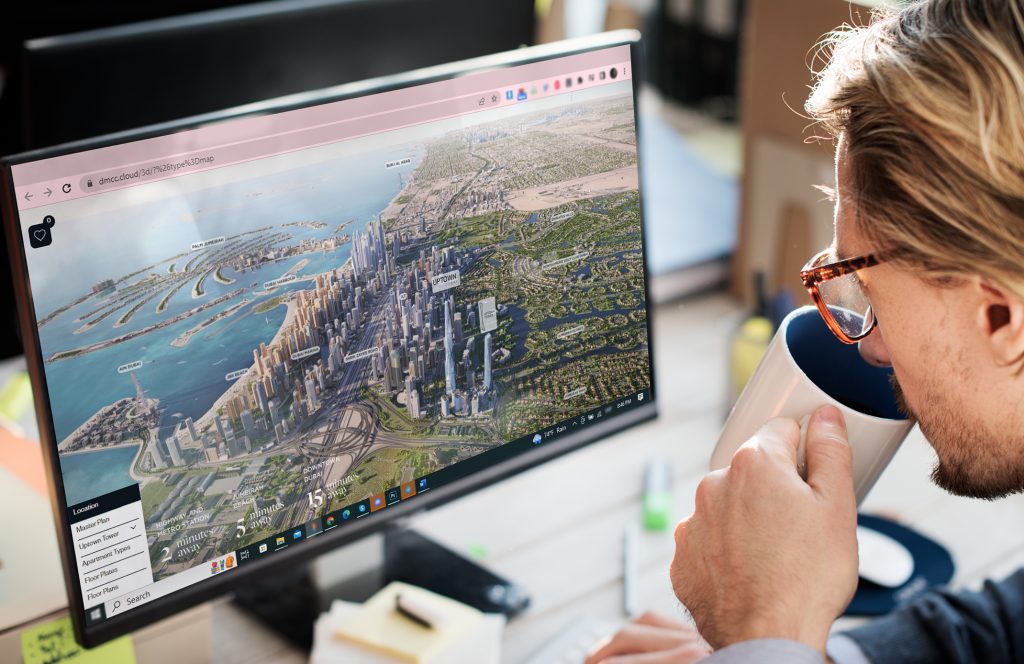
Interactive 3D visualization is no longer just a flashy addition to a presentation. It has become a separate channel of communication between the brand and the customer – one that works without intermediaries, explanations, or lengthy presentations. It’s an experience in which the user explores the space on their own, controls the viewing angles, interacts with details, and gradually builds trust in the project.

In the traditional sales model, the client followed a linear path: advertising, consultation, presentation, decision. Interactive environments are changing this logic. Now, the introduction to a project begins with an experience and only then transitions into a rational evaluation.

First Contact: The Moment of Engagement

The first click is the point where it’s decided whether a person will continue to interact with the project. If the interface is intuitive, the scene loads quickly, and navigation is clear without instructions, the user begins exploring without stress. It is at this stage that the first impression is formed – not only of the property but also of the brand as a whole.

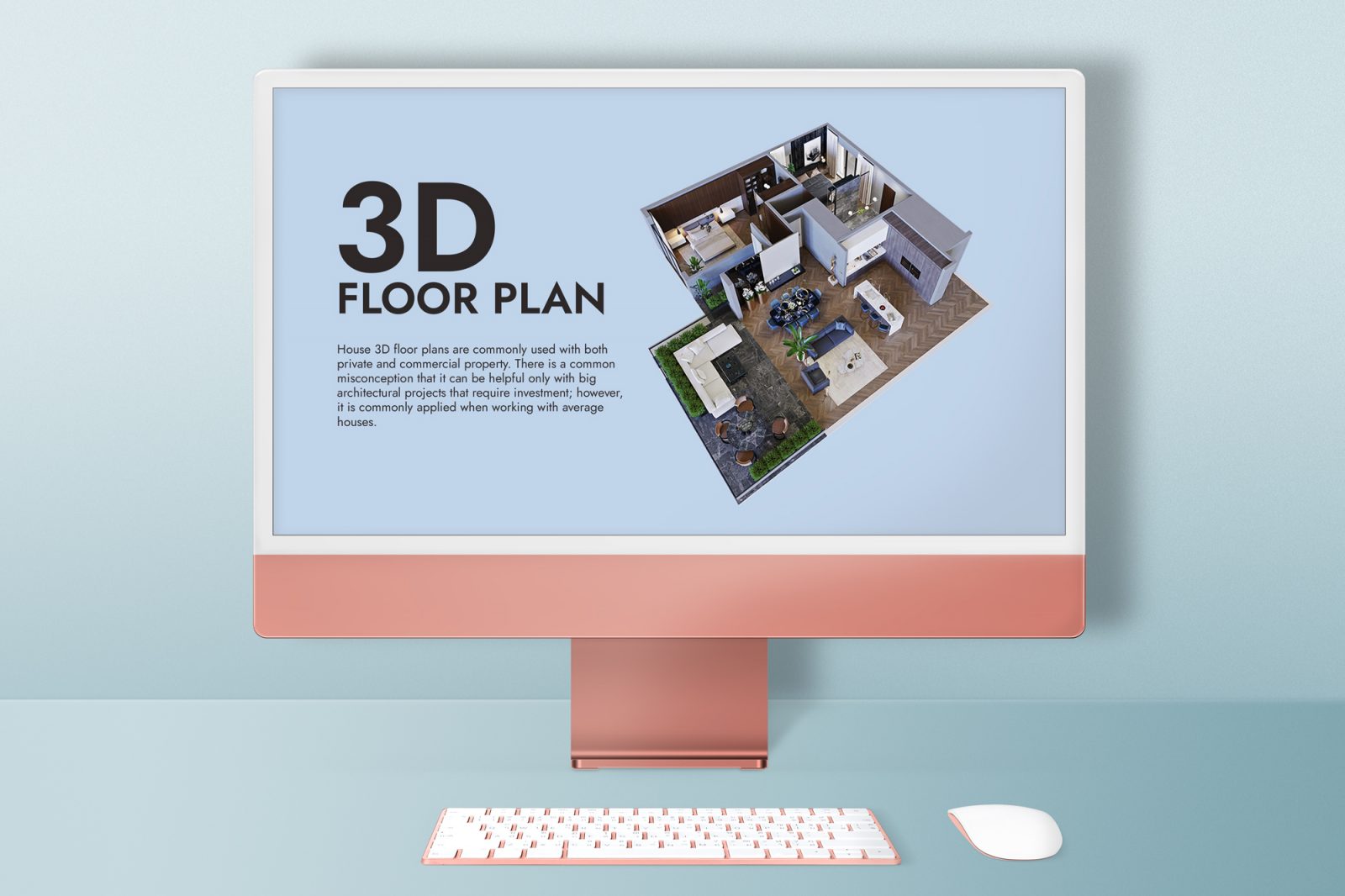
It’s important that an interactive 3D floor plan functions as an experience, not just a presentation. People don’t just look – they interact. This difference has a dramatic impact on the level of engagement.

Exploring the Space: The Trust Phase

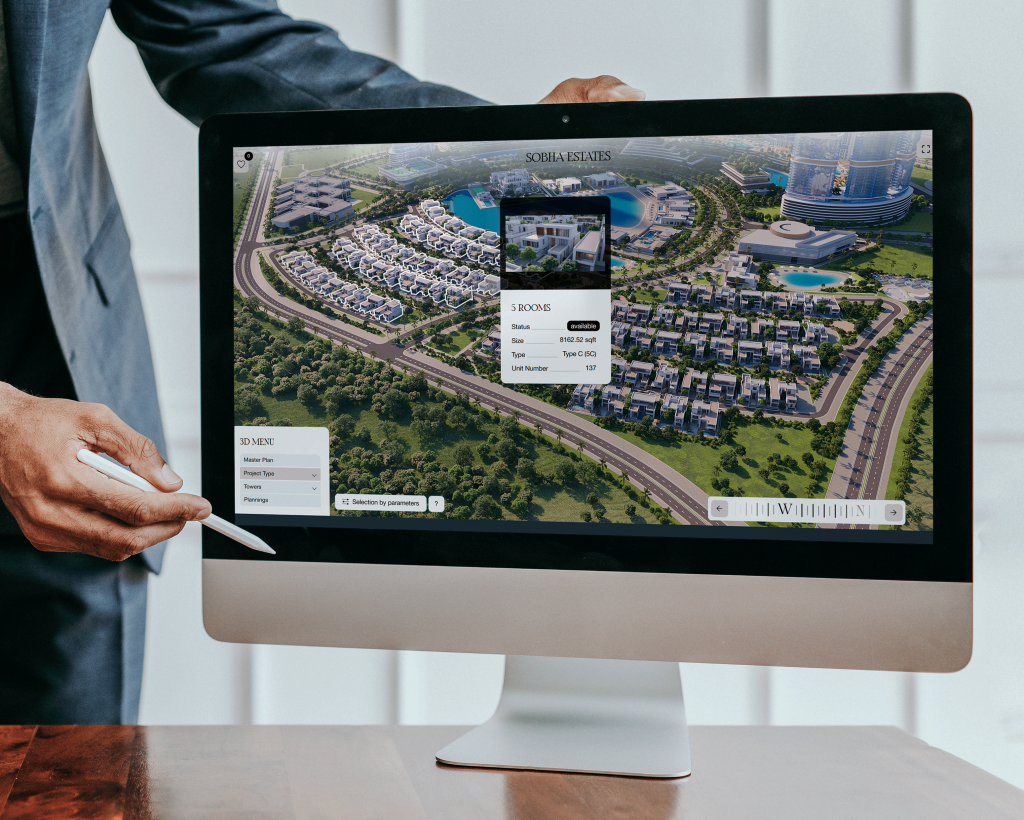
When a user begins to navigate the scene, switch between floors, change viewpoints, or review layout options, a psychological mechanism of control is triggered. The user feels that they are in control of the exploration process, rather than having information imposed on them. And this builds trust. Interactivity also allows questions to be answered before they even arise. The ability to view the view from a window, assess lighting, check the scale of rooms, or visualize a route replaces dozens of follow-up questions to a manager.

Personalization: The Moment of Engagement in Decision-Making

The greatest impact of an interactive 3D floor plan occurs when the user begins to interact with different scenarios. Changing materials, selecting finish options, and exploring various spatial configurations – all of this creates a sense of involvement in shaping the future environment. At this stage, the project ceases to be an abstract proposal. It becomes a personalized version of the space that the user has already partially “tailored to their liking.” This is where an emotional connection is formed – one of the key factors in decision-making.

Rationalization: The Final Stage

After being emotionally engaged, the client moves on to a logical evaluation. They analyze the layout, dimensions, functionality, and the price-quality ratio. But it’s important to note that this stage occurs only after a positive attitude toward the project has already been established. The interactive experience builds the foundational trust upon which a rational decision is based. In traditional presentations, the order is reversed: first the numbers, then the emotions. Interactive 3D presentations reverse this order, thereby enhancing the effectiveness of communication.

Why This Is Important for Developers and Brands

Understanding the customer journey in an interactive environment allows you to design not only the space itself but also the experience of interacting with it. This means that 3D solutions should be developed not as a standalone product but as part of a marketing strategy.

When interactive visualization is done right, it serves several purposes at once: it showcases the project, answers questions, builds trust, and brings the customer closer to a decision – all without direct intervention from a manager.

Interactive 3D visualizations are not just visualization technology, but a full-fledged communication scenario with the client. From the first click to the final decision, the user follows a journey that combines experience, emotions, and analytics. The better this journey is thought out, the more naturally the client arrives at a choice. In today’s digital environment, the projects that succeed aren’t the ones that explain things best, but the ones that let you experience them. This is precisely the main strength of interactive 3D.

Get in Touch

Drop us a line or give us a ring. We love to hear from you!


Price Guideline 1024x683
Your Package

×
Dein Paket

×
Il tuo Pacchetto

×
Votre Choix

×
اختيارك

×
Your Request


×
Your Request


×
Your Package

×
Your Package

×
Your Package

×
Your Package

×
Your Package

×
Dein Paket

×
Dein Paket

×
Dein Paket

×
Dein Paket

×
Dein Paket

×
Il tuo Pacchetto

×
Il tuo Pacchetto

×
Il tuo Pacchetto

×
Il tuo Pacchetto

×
Il tuo Pacchetto

×
Il tuo Pacchetto

×
Votre Choix

×
Votre Choix

×
Votre Choix

×
Votre Choix

×
Votre Choix

×
اختيارك

×
اختيارك

×
اختيارك

×
اختيارك

×